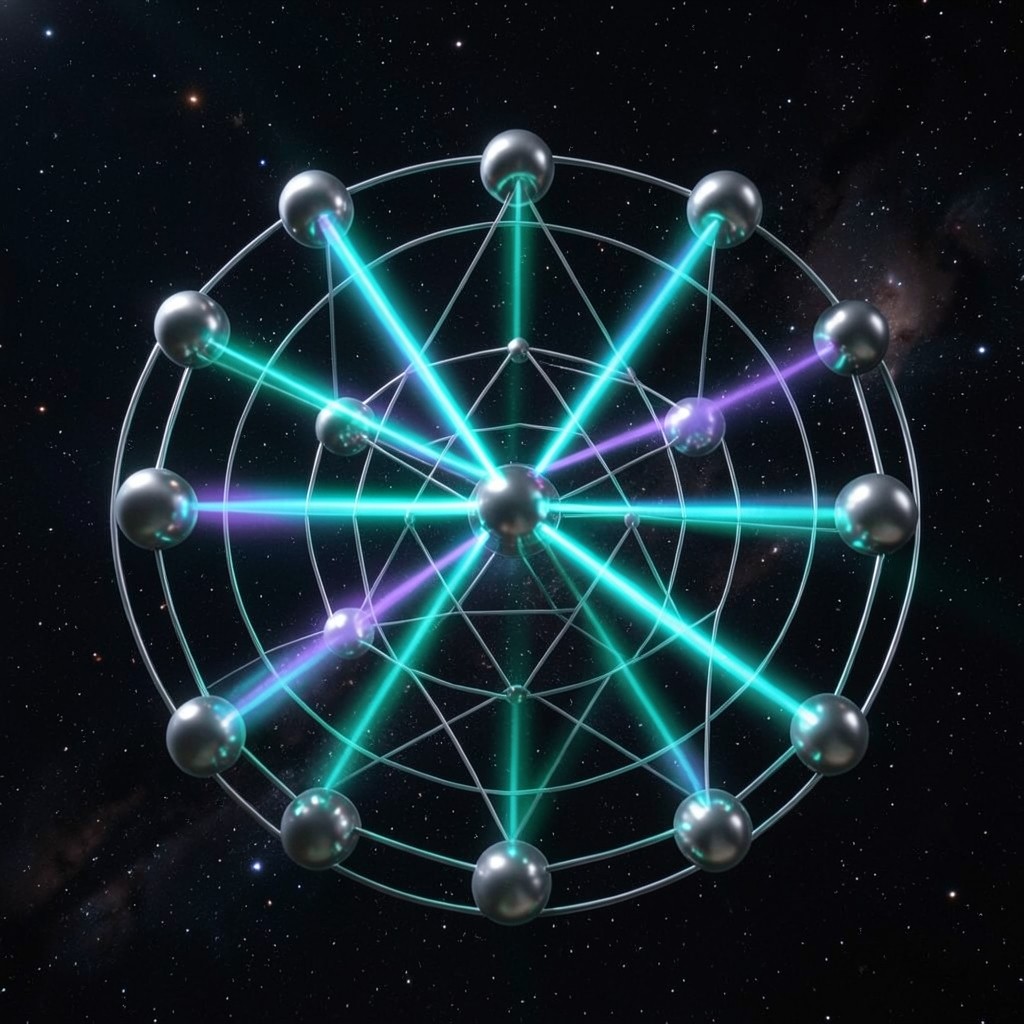
What is a Network Validator?
In the Dime architecture, a Validator is a dedicated computer running specialized software that validates state transitions, packages incoming transactions into blocks, and participates in continuous cryptographic voting to finalize the ledger.
Unlike proof-of-work systems where energy-intensive computational puzzle-solving determines block authorship, modern proof-of-stake protocols select block authors based on a deterministic leader schedule derived from network stake weight and epoch random seeds.
+-------------------------------------------------------------------------+
|                  Validator Block & Consensus Lifecycle                  |
+-------------------------------------------------------------------------+
| 1. Slot Ingress: Leader receives UDP/QUIC transaction packets           |
| 2. Execution: Parallel accounts updated via runtime engine              |
| 3. Dissemination: Block shredded into erasure-coded Turbine packets     |
| 4. Verification: Receiving nodes validate state root & cast Vote Tx     |
| 5. Finality Threshold: 66.7% of stake-weighted votes = Finalized Block  |
+-------------------------------------------------------------------------+
The Five Stages of Network Consensus
1. Leader Rotation & Slot Allocation
Time in the network is partitioned into slots (roughly 400 milliseconds each). An entire epoch contains hundreds of thousands of slots.
At the start of each epoch, the protocol calculates a pseudo-random, stake-weighted leader schedule. Every validator knows in advance which node will propose a block at each exact slot.
2. Transaction Ingestion via QUIC/UDP
Clients and RPC nodes transmit signed transaction packets directly to the current designated leader using high-performance network protocols. Transactions include priority fees and strict computational compute unit limits to prevent memory exhaustion attacks.
3. Turbine Tree Dissemination
Broadcasting a 10-megabyte block to 2,000 independent validator nodes simultaneously would quickly saturate the leader’s outbound network bandwidth.
To overcome this, Dime employs a tree-based protocol called Turbine:
- The block is divided into small data packets and augmented with Reed-Solomon erasure codes.
- The leader transmits subsets of packets to a small root tier of nodes.
- Each tier retransmits its assigned packets down a multi-layered fanout tree.
- Even if up to 33% of the packets are dropped in transit, any validator can mathematically reconstruct the entire block without requesting retransmissions.
4. Vote State Transactions
Once a receiving validator reconstructs a block and executes its state updates locally to confirm that all cryptographic balances and state transitions match, it produces a signed Vote Transaction.
This vote is transmitted back across the gossip network, referencing the specific block hash and slot number.
5. Optimistic and Root Finality
When a block accumulates votes representing more than two-thirds (66.7%) of total active network stake weight, the block achieves Optimistic Finality.
When consecutive descendant blocks also accumulate required voting supermajorities, the block reaches irreversible Root Finality, meaning it cannot be rolled back without violating the cryptographic safety assumptions of the network.
Hardware & Network Requirements for Validators
Maintaining sub-second consensus requires high-grade server infrastructure:
| Component | Minimum Recommended Specification | Architectural Justification |
|---|---|---|
| CPU | 24+ Cores (3.0 GHz+ base clock, AMD/Intel) | Supports parallel signature verification and memory hashing. |
| RAM | 256 GB - 512 GB High-Speed ECC RAM | Necessary to hold the entire live account state in uncompressed memory. |
| Storage | 2x NVMe SSDs (PCIe Gen4, 2TB+ each) | Separates OS write-ahead logs from high-IOPS ledger write cycles. |
| Network | 1 Gbps - 10 Gbps symmetrical bandwidth | Transmits and ingests continuous megabytes of shredded block streams. |
To study node setup, Prometheus telemetry monitoring, and gossip topology in an interactive lab, see our Validator Architecture & Consensus Masterclass.